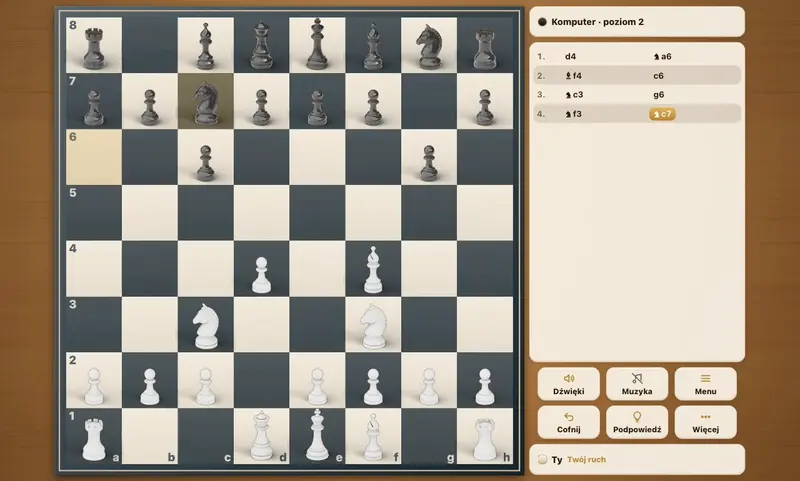
Kingside and queenside castling
Kingside castling goes towards the rook nearer the king: the white king moves from e1 to g1 and the rook from h1 to f1. Queenside castling goes towards the farther rook: the king from e1 to c1 and the rook from a1 to d1. Black castles the same way on the eighth rank. In chess notation kingside castling is written O-O and queenside castling O-O-O.
When are you allowed to castle? Five conditions
- The king has not moved yet in this game.
- The rook you castle with has not moved yet either.
- All squares between the king and that rook are empty.
- The king is not in check at the moment of castling.
- The king does not pass through or land on a square attacked by the opponent. The rook may pass through an attacked square.
When to castle and which side to choose?
Usually in the opening, after developing the knight and bishop on one side. Kingside castling needs only two pieces out of the way and usually leaves the king safer. Queenside castling brings the rook to the centre faster, but the king stands closer to the middle and needs cover. If your opponent is attacking one side, castle to the other.
The most common castling mistakes
- Moving the king and then trying to castle: after the first king move, castling is gone for the whole game.
- Castling while in check: first you have to get out of check.
- Castling too late: a king left in the centre becomes a target before you can tuck it away.